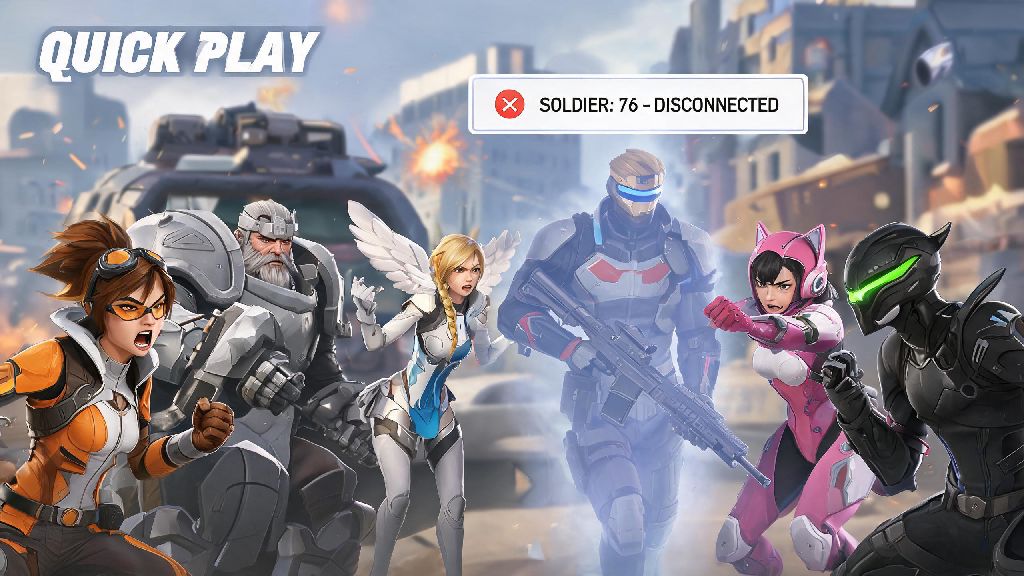
We’ve all been there: your team is getting rolled so hard there’s no point in sticking around, your internet cuts out mid-fight, or a family member needs your help immediately before the match ends. If you’ve ever bailed on a quick play game before the final score pops up, you’ve probably wondered: can you get banned for leaving quick play Overwatch? The short answer is it depends on a few key factors, from how often you leave to the reason for your exit, and we’re breaking down all the official rules and unwritten best practices below to help you keep your account in good standing.
Can You Get Banned for Leaving Quick Play Overwatch: Official Penalty Rules
When asking can you get banned for leaving quick play Overwatch, the first thing to understand is that Blizzard’s system is built to prioritize patterns over one-off mistakes. You will never get banned or penalized for leaving a single quick play match, even if you do it intentionally because you’re frustrated with your team. The system tracks your leave rate over a rolling 20-match window, so isolated incidents don’t impact your account standing at all.
If you leave multiple matches in a short period, you’ll first get a quiet warning that only you can see, prompting you to finish matches to avoid penalties. If you continue leaving, the next penalty is a 75% XP reduction for all matches you play until you complete enough full games to bring your leave rate back down. This XP penalty applies to all game modes, not just quick play, so you’ll grind for battle pass levels much slower if you trigger it.
Temporary suspensions only kick in if you keep leaving matches consistently for weeks on end, even after multiple XP penalties. First suspensions are usually 24 hours, and they get longer with repeated offenses. Permanent bans for quick play leaving are extremely rare, and only apply to players who leave 80% or more of their matches over months of play, even after multiple formal warnings from Blizzard. Disconnections due to server errors don’t count against you in almost all cases, as the system automatically detects when outages are on Blizzard’s end rather than your own.
Common Edge Cases That Don’t Count As Intentional Leaving
Blizzard’s leaver system has built-in exceptions for circumstances out of your control, so you don’t have to panic if you have to step away from a match for a valid reason. The following scenarios almost never lead to penalties, even if they happen semi-regularly:
If you do get a penalty you think is unfair, you can submit a support ticket to Blizzard to appeal. You’ll have a much higher chance of getting the penalty reversed if you have proof like crash logs or server outage notifications from the time of the leave. That said, repeated “emergency” leaves will still trigger penalties eventually, so if you know you only have 10 minutes to play, it’s best to avoid queuing for a match that could last 15 to 20 minutes.
How To Avoid Penalties For Accidental Quick Play Exits
Even if you never intend to leave a match early, there are simple steps you can take to avoid triggering accidental penalties from disconnections or unexpected interruptions. First, check your internet connection before queuing if you have spotty service, and use a wired connection if possible to cut down on random drops. If you’re playing on a laptop, make sure it’s charged or plugged in, so a dead battery doesn’t kick you out mid-match.
If you do get disconnected in the middle of a game, try to log back in as soon as possible. If you rejoin the match before it ends, the leave won’t count against you at all, even if you only make it back for the final 30 seconds of play. It’s also a good habit to check your schedule before queuing, so you don’t start a match right before you have to leave for work or an appointment.
If you do have to leave a match mid-game for an emergency, take two seconds to type a quick message to your team explaining the situation. It won’t prevent a penalty if you leave often, but it’s common courtesy, and it reduces the chance that other players will report you for toxic behavior. Reports alone won’t get you banned for leaving, but they can flag your account for closer review if you already have a high leave rate.
What Happens If You Get A Temporary Suspension For Leaving
If you do get hit with a temporary suspension for repeated quick play leaves, the first thing to know is that it’s not the end of the world. First-time suspensions are almost always 24 hours, and they only get longer if you continue the same behavior after the suspension ends. Suspensions for leaving apply to all Overwatch game modes, not just quick play, so you won’t be able to play competitive, arcade, or even custom games while your suspension is active.
Once your suspension ends, focus on finishing every match you queue for over the next few weeks. Your leave rate resets over time, so as long as you complete most of your games, you won’t get further penalties. Avoid the temptation to leave matches just because your team is losing, even if it feels like there’s no chance of a comeback. Even a loss gives you full XP and counts towards your completed match rate, so it’s always better to stick it out if you can.
If you get multiple suspensions, permanent bans are technically possible, but they’re reserved for the most extreme cases. Blizzard would rather reform player behavior than ban accounts permanently, so you’ll get plenty of warnings before that happens. If you find yourself leaving matches often out of frustration, consider taking a break from the game for a few days instead of queuing when you’re already annoyed.
At the end of the day, the question of can you get banned for leaving quick play Overwatch has a pretty straightforward answer: only if you make a habit of repeatedly ditching matches without a valid reason. Blizzard’s penalty system is designed to punish players who ruin the experience for others on a regular basis, not people who have to step away occasionally for real life issues. As long as you make an effort to finish the matches you queue for, rejoin when you get disconnected accidentally, and avoid making a habit of leaving early, you’ll never have to worry about losing access to your account over quick play exits.