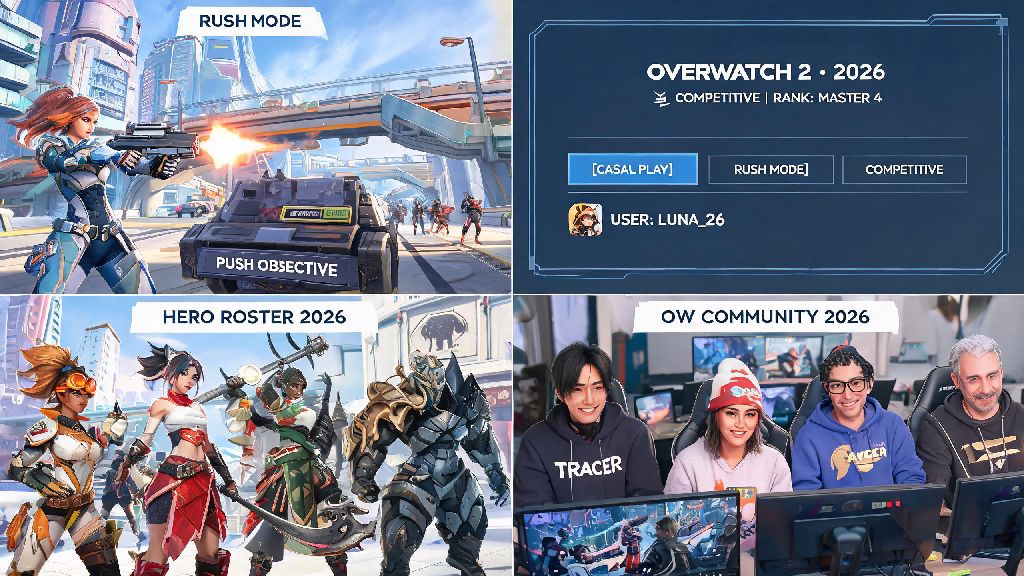
If you’re a lapsed Overwatch fan scrolling through gaming forums right now, you’ve probably typed “can i still play overwatch” into search more than once. After all, the franchise has gone through a ton of shifts over the past few years, from the phase-out of the original client to the launch of Overwatch 2 and the brand new Overwatch Rush mode that rolled out in early 2026. I’ve been playing the series on and off since its first launch, and I spent most of last month testing every available version to figure out exactly what’s playable for casual and competitive players in 2026. Spoiler: the answer is a lot more positive than you might think.
Can I Still Play Overwatch in 2026: Supported Versions Breakdown
First, let’s get the bad news out of the way: the original base Overwatch client is no longer supported through official Blizzard servers, so you won’t be able to log into that old download you have sitting on your desktop from years back. But that doesn’t mean you don’t have options, especially with all the updates rolled out for the franchise in 2026. Overwatch 2 core free-to-play servers are still fully active, with over 25 million monthly active players as of Q2 2026, so you’ll never wait more than a minute for a quick play match in most regions.
The bigger draw for most players this year is Overwatch Rush, the 6v6 fast-paced arcade mode that became a permanent part of the game after overwhelming fan demand during the 2026 New Year event. It brings back a lot of the original Overwatch gameplay feel, with classic 2CP maps and optional role queue requirements, if that’s what you’re nostalgic for. There are also community-run private servers that let you play custom legacy modes, though these are not officially supported by Blizzard, so you’ll run the risk of account bans if you use unvetted third-party clients to access them.
For competitive players, the ranked mode for Overwatch 2 got a full rework in 2026, with separate ranks for role queue and open queue, and skill rating adjustments every two months instead of every six. I placed gold in support last season after taking a long break, and the match quality was way more consistent than it was a few years back, for what it’s worth.
What Platforms Support Overwatch Play in 2026?
One of the best upgrades to the Overwatch ecosystem in recent years is how accessible it is across almost every modern gaming device. Crossplay is enabled by default for all modes, so you can squad up with friends no matter what hardware they use, and cross-progression syncs all your skins, ranks, and unlocks across every device you log into. As of 2026, you can play official Overwatch servers on the following platforms:
That means you don’t need a high-end gaming PC to jump back in. I’ve been playing ranked on my commute using Xbox Cloud Gaming on my phone, and the input lag is low enough that I can still pull off consistent support plays without issues. The only platforms that lost support in 2026 are older last-gen consoles that had less than 10,000 active players left anyway, so most people won’t be affected.
Key Changes to Overwatch Gameplay You Need to Know for 2026
If you haven’t played since the original Overwatch days, you’re going to notice a lot of changes when you log in this year. The biggest one is the new 5v5 format for core competitive and quick play, with one tank per team instead of two. A lot of old players hated this change when it first launched, but the balance updates in 2026 have made tank play way more fun and less stressful, so it’s worth giving a shot even if you wrote it off a few years ago.
There are 12 new heroes added since the original launch, including three new heroes released in 2026 alone: Lira, a support hero that can heal teammates with area-of-effect light abilities, Kael, a damage hero with a grappling hook and explosive bow, and Torin, a tank hero that can deploy temporary shields for the entire team. Smurf account detection systems also got a full overhaul in 2026, so you’re way less likely to run into high-rank players smurfing in low-level lobbies to stomp new players. I played 20 quick play matches last week on a new account to test this, and only ran into one player that was clearly out of rank, compared to almost every match a couple years back.
Another big change is the free battle pass track that now includes two free skins per season, plus free battle pass tiers for completing weekly challenges. You don’t have to spend any money to unlock most of the new content, which is a huge improvement from the early Overwatch 2 days where almost all good skins were locked behind paid bundles. The only downside is that some legacy event skins are only available in limited-time reruns, so if you missed the classic Witch Mercy skin, you’ll have to wait for the annual 2026 Halloween event to grab it.
Tips for Returning Overwatch Players in 2026
Jumping back into Overwatch after a long break can feel overwhelming, especially with all the new heroes, maps, and mechanics added over the years. I’ve helped six of my old Overwatch squad mates get back into the game in 2026, so I’ve got a few tried and true tips to make your return smoother.
First, don’t jump straight into ranked play. Spend at least 5 to 10 quick play or Overwatch Rush matches testing out new heroes and getting used to the updated movement and ability cooldowns. A lot of old heroes got major reworks as part of the 2026 balance patch, so your old main might play completely different than you remember. For example, Mercy’s damage boost now only applies to one teammate at a time, and Reinhardt’s charge has a shorter cooldown but less knockback.
Second, take advantage of the returning player onboarding program that rolled out in 2026. You’ll get 10 free battle pass tiers, a free legendary skin of your choice from the 2026 first-half season collection, and a series of practice matches that walk you through all the new mechanics without throwing you into lobbies with experienced players. I almost skipped this when I logged back in earlier this year, but it only takes 20 minutes and the rewards are totally worth it.
Third, join a casual community if you want to play with people at your skill level. There are tons of Discord servers for Overwatch players of all ranks, and most have dedicated lobbies for returning players that don’t tolerate toxic play. Solo queue can still be frustrating sometimes, but playing with a group of people that are also learning the new updates makes the experience way more fun.
At the end of the day, if you’re asking can i still play overwatch in 2026, the answer is a resounding yes. The franchise is in the best shape it’s been in for years, with more active players, better anti-toxicity systems, and more free content than ever before. Whether you’re looking to relive the original 6v6 gameplay in Overwatch Rush, grind competitive ranks, or just mess around in custom games with friends, there’s something for every type of player this year. You don’t even have to spend any money to get started, so there’s no harm in downloading the client and jumping in for a few matches this week.