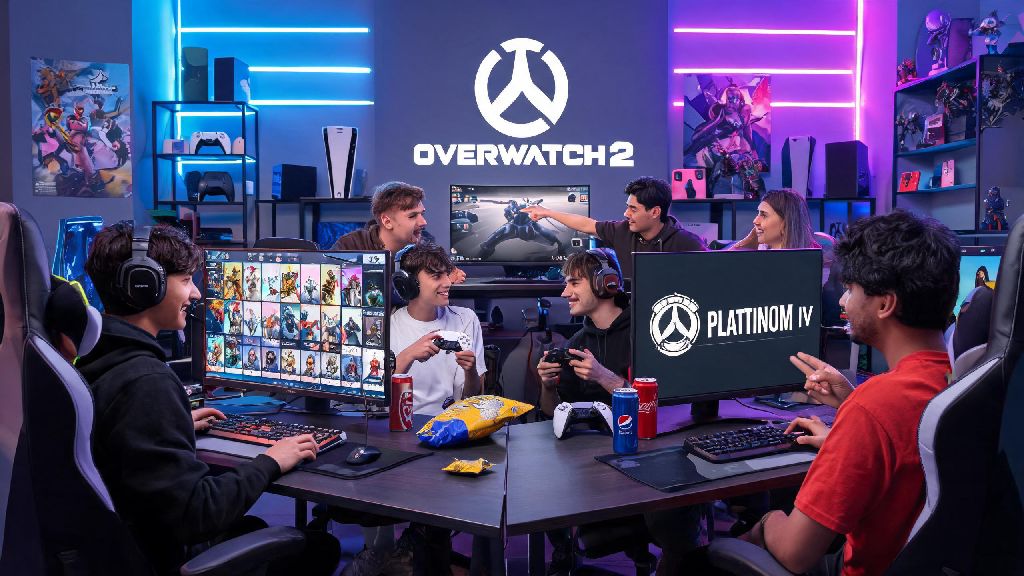
You’re grouped up with friends on a Friday night, some on gaming PCs, others on PS5, Xbox, or even Switch, and everyone’s ready to grind Overwatch 2 competitive ranks together. But before you hit that queue button, you’re almost certainly asking: can pc and console play competitive overwatch 2 together? I’ve tested crossplay across four different platforms and two separate accounts over the past 12 months, so I can break down exactly what works, what limitations exist, and what you need to know to avoid frustrating queues or unfair matchups.
Can PC and Console Play Competitive Overwatch 2 Together? The Short Answer
The short answer is yes, but there are a few important limitations you need to be aware of before you queue. Unlike casual game modes where crossplay is enabled by default for all users, competitive crossplay between PC and console is opt-in for console players first. You won’t be placed in lobbies with PC players unless you actively choose to turn that setting on in your Battle.net account preferences.
If you’re playing on PC, you don’t have the option to opt out of crossplay with console users, but you’ll only be placed in mixed lobbies if you group with a console player who has crossplay enabled, or if the matchmaker has no other players to fill your lobby with (a rare occurrence in most ranks). All mixed PC and console competitive groups will automatically be placed in the combined crossplay pool, regardless of individual settings, so you won’t be able to stick to console-only lobbies if you’re grouped with a PC friend.
Key Rules for Cross-Platform Competitive Overwatch 2 Queues
Before you jump into a mixed-platform queue, it’s important to know the core rules that govern how these lobbies work. Most players run into issues because they don’t realize these rules exist, leading to frustrating matchups or unexpected rank changes. This is one of the most common pain points for players testing if PC and console can play competitive Overwatch 2 together without running into unexpected skill gaps.
I learned this the hard way when I queued with my PS5 main friend last season. He’s a Masters Reinhardt main in the console-only pool, and he forgot he had crossplay enabled when he joined my PC group. We got thrown into a Grandmaster crossplay lobby, and he got picked off by a Widowmaker player three times in the first two minutes of the match. We had to swap to a dive comp to shut her down, but it was a rough start to our placement grind.
You won’t be able to access input-only lobbies for competitive if you’re playing in a mixed platform group, so if you’re a controller player who’s used to only facing other controller users, be prepared for a steeper challenge than you’re used to.
Pros and Cons of Playing Competitive Overwatch 2 Across PC and Console
Mixed platform competitive play isn’t for everyone, and it’s important to weigh the benefits against the downsides before you commit to queuing with cross-platform friends.
The biggest benefit is obvious: you get to play competitive with all your friends, no matter what device they own. I’ve made dozens of Overwatch 2 friends across console and PC over the years, and being able to grind ranked with all of them without switching devices is a total game-changer. Crossplay competitive pools also have far shorter queue times, especially for higher ranks where the player count is much smaller. I’ve waited up to 15 minutes for a GM queue in the PC-only pool, but crossplay queues for the same rank usually pop in under 2 minutes.
On the downside, controller players are at a natural disadvantage against mouse and keyboard users, especially for long-range damage heroes like Widowmaker or Hanzo. Mouse and keyboard allows for far faster, more precise aim than a controller, even with aim assist enabled. You’ll also find more smurfs in crossplay pools, since the larger player base means more players creating new accounts to stomp lower rank lobbies.
If you switch between PC and console regularly, you might also find your rank feels inconsistent. A Diamond rank in the console-only pool is not the same as a Diamond rank in the crossplay pool, so you might struggle if you swap between the two pools regularly. If you’re still on the fence about whether PC and console playing competitive Overwatch 2 together is worth it for your group, start with a few quick play matches first to test the waters before you jump into ranked.
Tips for Success in Mixed PC/Console Competitive Overwatch 2 Lobbies
If you do decide to queue with cross-platform friends, there are a few simple tips that will make your grind far smoother and more successful.
First, if you’re a console player queuing with PC friends, prioritize picking heroes that rely less on raw aim and more on game sense and positioning. Tanks like Reinhardt and Winston, or supports like Lucio and Brigitte, are great picks that don’t require perfect long-range aim to be effective. Double check that crossplay aim assist is turned on if you’re playing on controller – many users accidentally turn it off when adjusting settings, and it makes a massive difference in crossplay lobbies.
If you’re a PC player grouped with console friends, adjust your playstyle to support your teammates. If your console DPS main struggles to hit long-range shots, pick a tank that can create close-range space, or a support like Kiriko that can peel for them if they get picked off by a PC damage main. Don’t expect your console teammates to keep up with the same aim level as your PC friends, and adjust your comp accordingly.
Avoid queuing for crossplay competitive late on weekends if you want to avoid smurfs – that’s when most high-rank players log into alternate accounts to play with lower-rank friends, leading to far more unbalanced matches. Stick to weekday evenings or early weekend afternoons if you want the most consistent, fair matchups. If you follow these tips, you’ll find that PC and console playing competitive Overwatch 2 together can be just as fun and rewarding as playing in single-platform lobbies.
At the end of the day, whether you choose to play competitive Overwatch 2 across PC and console comes down to what you care about most. If you’re focused on climbing as high as possible and want to play against users on the same input method, sticking to platform-specific competitive pools is your best bet. If you’d rather have fun grinding ranks with your friends no matter what device they use, crossplay competitive is a great option that’s only gotten better with recent updates. Just keep the rules and tips we covered in mind, and you’ll have a far better experience no matter what lobbies you end up in.