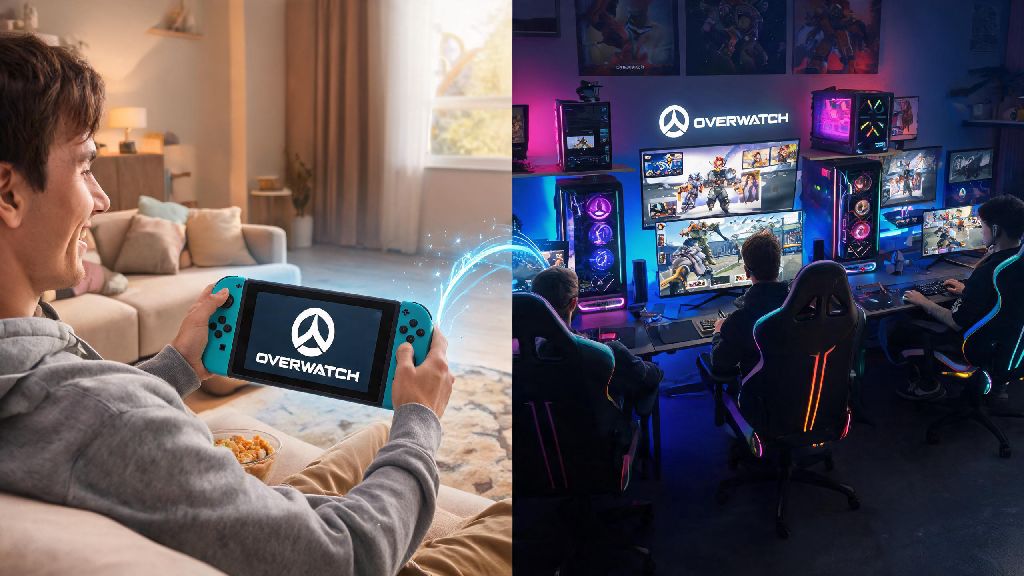
If you’ve been grinding Overwatch Rush on your Nintendo Switch while your friends queue from their gaming PCs, you’ve definitely wondered if you can switch Overwatch play with pc without jumping through a dozen confusing hoops. I’ve been there too: last month I brought my Switch to a friend’s house and spent 20 minutes fumbling through menus trying to join their PC lobby before I figured out all the unwritten rules of cross-platform play for the game. This guide breaks down everything you need to know, from setup steps to hidden settings that will make your crossplay sessions way more fun, no technical degree required.
Can You Switch Overwatch Play With PC: Official Crossplay Rules Explained
The short answer is yes, Blizzard supports full crossplay between Nintendo Switch and PC for all Overwatch game modes, including Overwatch Rush, competitive play, quick play, and arcade modes. The only hard requirement is that both your Switch and PC Overwatch accounts are linked to the same Battle.net profile. All progress carries over between Switch and PC as long as you’re signed into the same account, so you won’t lose any skins, battle pass tiers, or rank when swapping platforms.
Crossplay is enabled by default for all accounts over the age of 13 in most regions. If you have a child account, you may need to adjust parental control settings to allow cross-platform play first. I tested this last week when I swapped from my Switch handheld to my PC mid-session to get better frame rate for a competitive match, and all my progress stayed exactly the same, no extra steps needed besides closing the game on one device before opening it on the other.
Step-by-Step Setup to Play Overwatch Between Switch and PC
The first time you set up crossplay between Switch and PC only takes a few minutes, and you won’t have to repeat the steps again unless you make a new account. First, link your Nintendo account to your Battle.net profile through the official Battle.net website. Once linked, open Overwatch on both devices and head to the settings menu to confirm crossplay is turned on.
Make sure crossplay is enabled in your in-game privacy settings on both platforms, or you won’t be able to send or receive cross-platform friend requests. To add a PC friend to your Switch lobby, just search their full Battle.net tag (the name followed by a four-digit number) in the in-game social menu, send a request, and you can invite them to your lobby as soon as they accept. Once you have everything set up, you can easily switch Overwatch play with pc whenever you want, no extra steps required after the first setup.
There are a few common mistakes that can trip you up during setup, so keep these in mind to avoid frustration:
Key Differences to Know When Switching Between Switch and PC Overwatch
While crossplay works seamlessly for the most part, there are a few key differences between the Switch and PC versions of Overwatch that you should prepare for, especially if you swap platforms regularly. The biggest difference is performance: the Switch version runs at 30 frames per second in docked mode and 720p resolution, while the PC version can run up to 240 frames per second at 4K resolution depending on your hardware.
You may notice a slight learning curve when swapping between platforms, especially if you use different control schemes. Most Switch players use gyro controls for more precise aim, while PC players almost exclusively use mouse and keyboard, which is much faster for quick flicks and fast-paced heroes like Tracer or Genji. You can customize your control layouts on both platforms to match each other if you want to cut down on that learning curve: I set my Switch ability buttons to the same layout as my PC mouse side buttons so I don’t fumble when swapping mid-session.
Input-based matchmaking is turned on by default to keep lobbies fair, so if you’re playing on Switch with a controller, you’ll be matched with other controller players even if they’re on PC. You can turn this setting off if you want to play against mouse and keyboard players, but it’s not recommended for newer players, as mouse and keyboard has a significant advantage for fast-paced gameplay.
Tips to Make Crossplay Between Switch and PC More Enjoyable
A few small tweaks can make your crossplay sessions way more fun, no matter which platform you’re playing on. First, if you’re playing on Switch, use a wired internet connection if possible. The Switch’s built-in wifi is notoriously spotty, and lag will be way more noticeable when you’re playing against PC players with faster, more stable connections.
Adjust your field of view (FOV) settings on both platforms to be as close as possible. The Switch version has a lower maximum FOV than the PC version, but setting both to the highest available option on each device will make your perspective feel consistent when swapping. Adjusting FOV is one of the easiest ways to reduce motion sickness when switching platforms, especially if you play for multi-hour sessions.
You don’t need a third-party voice chat app to talk to cross-platform friends, either: Overwatch’s built-in voice chat works across all platforms, so you can just connect your headset directly to your device of choice and jump into the lobby chat. If you’re playing competitive crossplay, keep in mind that the game will match your lobby against players at the rank of the highest-rated player in your group. I made that mistake once when I invited my GM PC friend to my Gold rank Switch lobby, and we got rolled so hard we quit after two matches. Now we only queue for quick play together when we’re messing around, and stick to same-rank lobbies for competitive.
At the end of the day, it’s totally possible to switch Overwatch play with pc, and the setup process is way simpler than most people assume. As long as you have your accounts linked correctly, crossplay enabled, and adjust your settings to account for platform differences, you can easily jump between playing on Switch on the go and PC at home, or queue with friends no matter what platform they use. Don’t overcomplicate it: test the settings out in a quick play match first before jumping into competitive, and you’ll be having fun crossplaying in no time.